
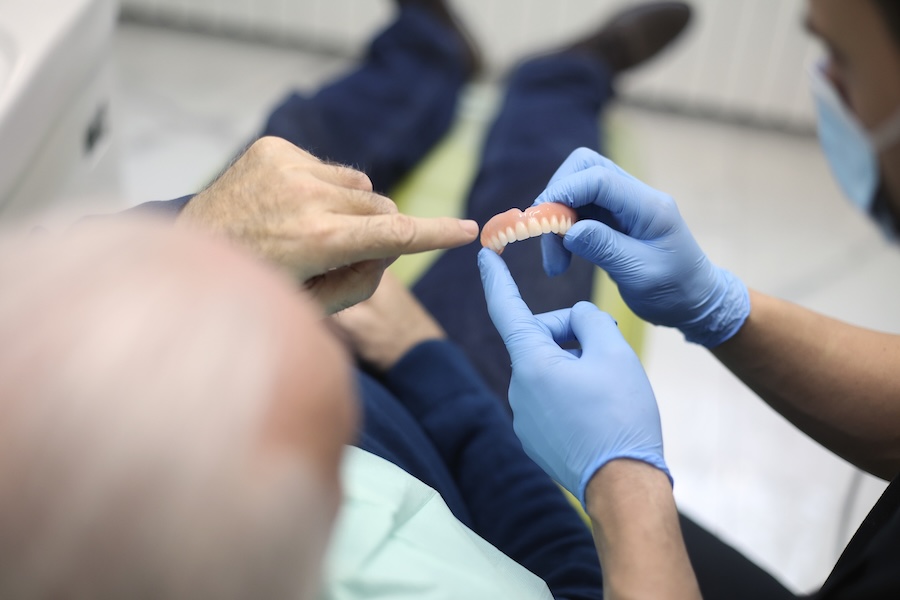
Eating With Dentures: A Step-by-Step Food Progression for the First Month
August 26, 2026 9:00 amEating with new dentures takes a little practice, even when the fit is good. Your cheeks and tongue are learning how to help keep the denture steady, while your gums are getting used to pressure in places that did not feel pressure before. Because of that, the first month usually goes better when you work up from softer foods instead of testing the denture with something tough right away.
At Ryan Dental in Olathe, KS, Dr. William Ryan and Dr. Randy Regier can help you through that adjustment period and make changes if something feels off. A new denture may feel bulky at first, and chewing can seem slower than you are used to, but that usually gets easier as your mouth adapts. Over time, you can add more texture and variety without feeling like every meal needs to stay soft.
The main thing is to let comfort guide the pace without forcing it. If one food feels too hard to control, go back to something easier for a day or two and try again later. Meanwhile, if the denture keeps rubbing the same area or shifts every time you chew, call the office rather than trying to work around the problem.
The First Few Days: Start Soft and Keep It Simple
During the first few days, softer foods are usually the easiest place to start. Scrambled eggs, yogurt, cottage cheese, oatmeal, mashed potatoes, applesauce, soft pasta, soup, pudding, and well-cooked vegetables can all work well. Since these foods need less chewing force, you can spend more time getting used to how the denture feels.
It also helps to take smaller bites than usual. Big bites can make the denture shift, especially before your cheeks and tongue have learned how to help stabilize it. So cut food into smaller pieces, chew slowly, and give yourself a little extra time at meals.
When you can, try chewing on both sides at the same time. If you chew only on one side, the denture may tip or lift on the other side. At first that can feel a little awkward, but it usually becomes more natural with practice.
How to Chew More Comfortably With New Dentures
Chewing with dentures is different from chewing with natural teeth, so there is usually a learning curve. Natural teeth are anchored in bone, while a removable denture rests on the gums and depends on fit, suction, and muscle control. Because of that, slower and more even chewing tends to work better than hard, one-sided biting.
Start by moving food toward the back teeth rather than biting into everything with the front. Biting straight into a sandwich, apple, or crusty bread can pull the denture forward. Instead, cut the food into smaller pieces and place it farther back where the chewing surfaces can handle it more evenly.
As you get more comfortable, you can test foods with a little more texture. If the denture stays steady and your gums are not sore afterward, you can keep moving forward. If not, back off for a bit and let the tissues settle before trying again.
The First Week: Add Soft Foods With More Texture
By the end of the first week, many people are ready to move beyond very soft foods. Soft rice, tender fish, meatloaf, shredded chicken, soft casseroles, steamed vegetables, ripe bananas, pancakes, soft bread, and macaroni and cheese can add more variety without asking too much from the denture. At this point, meals usually start feeling a little less limited.
Texture is often a better guide than whether a food is technically solid. A soft piece of fish may be much easier than a hard cracker, even though both are solid foods. So focus on foods that break apart easily with gentle pressure.
Sauces and gravies can help too. Dry foods are more likely to move around or stick, while moist foods are easier to control. Because of that, adding a little sauce can make chicken, rice, or pasta much easier to manage while you are still getting used to the denture.
Foods to Hold Off on at First
Some foods are better saved for later in the month because they can be hard to chew, sticky, or difficult to control. Hard nuts, popcorn, raw carrots, tough steak, crusty bread, sticky candy, chewing gum, and very chewy foods can all make a new denture shift. Early on, there is no real benefit to making meals harder than they need to be.
Sticky foods can be especially frustrating because they may pull at the denture while you chew. Peanut butter, caramel, and gummy candy can cling to both the food and the denture, which makes them harder to manage. Once you are more comfortable, you may be able to eat some of these again, but they are better saved for later.
Small seeds and popcorn hulls can also get under the denture and irritate the gums. If something gets trapped underneath, remove the denture, rinse it, and rinse your mouth before putting it back in. Trying to chew through that irritation usually makes the sore spot worse.
The Second Week: Start Testing Firmer Foods
During the second week, you can usually begin trying firmer foods in small amounts. Soft cooked meats, sliced turkey, tender chicken, firmer vegetables, soft tacos, and sandwiches cut into smaller pieces are all good places to experiment. By now, you may also feel a little more confident about how much pressure the denture can handle.
You may still find that some foods are much easier than others. A tender piece of chicken may go well, while a thick sandwich with chewy bread may feel much harder to control. That is normal, so there is no need to treat one difficult meal like a setback.
Keep using both sides when chewing whenever possible. Meanwhile, if one side of the denture keeps lifting or one area of the gums gets sore every time you eat, call Ryan Dental. A small adjustment can sometimes make a big difference in comfort.
How to Handle Bread, Sandwiches, and Tougher Textures
Bread can be surprisingly tricky with dentures because some types are dry, chewy, or sticky. Soft bread usually works better early on, while thick crusts, bagels, and dense rolls may take more practice. If a sandwich feels difficult, cut it into smaller pieces instead of biting into the whole thing.
Adding moisture can help here too. Tuna salad, egg salad, soft deli meat with a little condiment, or a softer wrap may be easier than dry bread with thick meat. Then, as your chewing improves, you can gradually try firmer breads again.
Tough meats usually take longer. Steak, pork chops, and dense cuts of meat can require more chewing force than a new denture handles comfortably at first. So start with tender, slow-cooked meats instead, then work your way up if the denture stays stable.
The Third Week: Bring Back More Variety
By the third week, many patients are ready for a wider range of foods. You may be able to add firmer vegetables, more types of meat, soft pizza, larger salads, or foods with a little more crunch. However, it still helps to cut things up and avoid overly large bites.
At this stage, you may notice that the denture feels less foreign than it did during the first few days. Your tongue is getting better at working around it, and your cheeks are helping stabilize it without as much conscious effort. Because of that, eating may start to feel more automatic.
Still, do not rush into very hard or sticky foods just because it feels like three weeks should be long enough. Comfort and stability are better guides than the calendar. If something feels awkward, try it again later rather than fighting through it.
The Fourth Week: Work Toward a More Normal Diet
By the fourth week, many people are eating a much broader diet. You may be able to handle firmer meats, more raw vegetables, crustier bread, and other foods that were difficult at the beginning. Even then, some foods may still need to be cut smaller or chewed more slowly than you used to.
Dentures do not feel exactly like natural teeth, so a few changes may stay part of your routine. You may still prefer to avoid extremely sticky candy, hard nuts, or foods that easily get under the denture. Over time, you will usually figure out which foods are easy and which ones are just more trouble than they are worth.
The goal is to get back to a varied diet that feels comfortable and enjoyable. That tends to happen gradually rather than all at once. By the end of the first month, most patients have a much better sense of what works for them.
What to Do if Food Keeps Getting Under the Denture
Food can sometimes work its way underneath a denture, especially early on. Small seeds, crumbs, and fibrous foods are common culprits. When that happens, the area can start feeling sore or gritty pretty quickly.
Take the denture out, rinse it, and rinse your mouth before putting it back in. If the same spot keeps trapping food every day, mention it to Dr. Ryan or Dr. Regier. The denture may need a small adjustment.
Also, do not try to solve the problem by adding more adhesive without checking the fit first. Adhesive can help with stability in some cases, but it should not be used to cover up a denture that is consistently rocking, rubbing, or leaving sore spots. If that keeps happening, the fit needs to be checked.
What if the Denture Feels Loose While You Eat?
A new denture can feel less stable while you are learning how to chew with it. Some movement early on is not unusual, especially if you are still figuring out how to balance pressure on both sides. However, the denture should not constantly pop loose or shift so much that every meal feels frustrating.
If it keeps moving, pay attention to when it happens. Does it lift when you bite with the front teeth? Does it rock when you chew on one side? Those details can help Dr. Ryan or Dr. Regier figure out whether the issue is technique, fit, or both.
Your gums can also change after extractions, especially during the first few months. As the tissues heal and the bone underneath reshapes, the denture may fit differently than it did at first. Because of that, relines or adjustments may be needed over time. If you want more stability while eating, implant-retained dentures may be another option to discuss, since they attach to dental implants and can reduce some of the movement that comes with traditional removable dentures.
When Sore Spots Need an Adjustment
Some mild tenderness can happen while the gums adjust to a new denture. However, a sharp sore spot that keeps getting worse should not be ignored. If one area feels rubbed raw or hurts every time you put the denture in, call Ryan Dental.
If you can do so comfortably, wear the denture for a little while before the adjustment appointment. That can make the irritated area easier for the dentist to locate. However, do not keep wearing it through severe pain.
Small adjustments can often relieve pressure without changing the whole denture. Once the sore area settles, eating usually becomes much easier again. That is one reason follow-up visits are part of getting comfortable with new dentures.
Dentures, Adhesive, and Eating
Some patients do well without denture adhesive, while others use it for added stability. If Dr. Ryan or Dr. Regier recommends adhesive, use the amount they suggest rather than adding more every time the denture moves. Too much can make cleanup harder and may not fix the real issue.
Still, adhesive can be useful once the denture fits well, especially for certain foods. However, if you feel like you need a large amount just to keep the denture in place, the fit should be checked. A denture that rocks or shifts constantly may need an adjustment or reline.
Be sure to clean the adhesive off the denture and gums daily. Then start fresh the next day instead of layering new adhesive over old material. That keeps the tissues cleaner and gives you a better sense of how the denture is actually fitting.
Keep Nutrition in Mind While You Adjust
It is easy to fall into a routine of mashed potatoes, pudding, and soup because those foods are comfortable. However, after the first few days, try to add protein, vegetables, fruit, and other nutrient-dense foods as you are able. Your body still needs variety, especially if you are also healing after extractions.
Eggs, fish, yogurt, cottage cheese, beans, soft chicken, cooked vegetables, and soft fruit are all good options while chewing is still limited. Then, as the denture feels more secure, you can bring back firmer foods. A blender or slow cooker can also help make familiar foods easier to eat without living on the same few meals.
If you start losing weight or avoiding meals because eating feels too difficult, mention it. Denture adjustment should not leave you unable to eat enough. Dr. Ryan or Dr. Regier can check whether fit or soreness is getting in the way.
Eating With Dentures at Ryan Dental in Olathe, KS
The first month with dentures is mostly about building comfort one meal at a time. Start with soft foods, then add more texture as your gums and muscles adjust, and keep bites smaller while you learn how the denture moves. As chewing starts to feel more natural, you can bring back firmer foods without rushing the process.
At Ryan Dental in Olathe, KS, Dr. William Ryan and Dr. Randy Regier can help if your denture feels loose, rubs a sore spot, or makes certain foods difficult to manage. If you are adjusting to new dentures or have questions about fit, eating, or follow-up care, call Ryan Dental to schedule an appointment!
Categorized in: Dental Tips, Dentures