
My Implant Feels Tender but Not Loose: When to Monitor vs. When to Call the Office
July 10, 2026 9:00 amA dental implant should feel stable. Once it has healed and the crown is in place, most people do not think about it much during the day. So when an implant starts feeling tender, sore, or different, it can raise a fair question: is this something to watch, or does the office need to check it?
The confusing part is that tenderness does not always mean the implant is failing. The implant may still feel firm. The crown may not wiggle. You may be able to chew, but something around the implant feels irritated, bruised, or sensitive when you press near the gums.
That tenderness can come from several places. The gums around the implant may be inflamed. Food may be getting trapped near the crown. The bite may be hitting harder than it should. If the implant crown was placed recently, the area may still be adjusting. However, tenderness can also be an early sign of infection or bone inflammation around the implant.
At Ryan Dental in Olathe, KS, Dr. William Ryan and Dr. Randy Regier can examine the implant, gum tissue, bite, crown, and bone support to see what is causing the soreness. Sometimes the answer is simple. Other times, the implant needs attention before the problem becomes harder to treat.
First, Notice What Kind of Tenderness You Feel
Before deciding whether to monitor or call, pay attention to what the tenderness feels like. Is it a mild sore spot when you brush near the implant? Does it hurt only when chewing? Is the gum tender to touch? Does it feel like pressure deep in the jaw?
Those details can help narrow down what may be happening. Gum tenderness may point to irritation or inflammation around the tissue. Biting soreness may mean the implant crown is taking too much pressure. A deeper ache may need a closer look, especially if it keeps coming back or gets stronger.
Also notice when it started. Tenderness right after a crown is placed can be different from tenderness that begins months or years later. A newer implant restoration may need time to settle or may need a bite adjustment. Meanwhile, an older implant that suddenly feels tender should be checked more carefully.
A dental implant does not have a nerve inside it like a natural tooth. Because of that, implant pain usually comes from the gums, bone, bite, or surrounding structures rather than from the implant itself “feeling” pain.
When It May Be Reasonable to Monitor Briefly
Mild tenderness may be reasonable to watch for a short time if it is recent, minor, and improving. For example, if you ate something crunchy and the gum tissue around the implant feels a little irritated the next day, you may decide to keep the area clean and see whether it settles.
The same may be true if a piece of food was caught around the implant and the gum feels slightly sore after you removed it. In that case, gentle cleaning and a little time may be enough.
However, monitoring should mean paying attention, not ignoring it for weeks. The tenderness should be getting better, not spreading, throbbing, or becoming more painful when you chew.
During that short monitoring period, keep the area clean with gentle brushing and any tools your dental team has recommended, such as floss, interdental brushes, or a water flosser. Also, avoid chewing hard or sticky foods directly on that side if biting makes it sore.
If the tenderness does not improve within a few days, or if you are unsure what caused it, call Ryan Dental and describe what you are feeling.
When to Call Ryan Dental
Call the office if implant tenderness lasts more than a few days, gets worse, or comes back repeatedly. Tenderness that keeps returning deserves a closer look, even if the implant still feels firm.
You should also call if the gum around the implant looks swollen, red, puffy, or bleeds when you brush. Bleeding around an implant is not something to dismiss, especially if it happens more than once.
Pain when biting is another reason to call. A dental implant crown can feel tender if the bite is too heavy or if pressure is hitting the implant unevenly. Since implants do not have the same cushioning ligament as natural teeth, extra bite force can be a problem.
Call promptly if you notice drainage, a bad taste, pus, fever, swelling in the face or jaw, or pain that is increasing. Those signs may point to infection and should not wait.
A loose crown, loose abutment, or implant that feels like it is moving also needs attention. Even if you are not sure whether the crown or implant is moving, the office can check it.
Gum Inflammation Around an Implant
The gum tissue around an implant can become inflamed, just like the gums around natural teeth. Plaque, food debris, cement residue, dry mouth, smoking, certain health conditions, or cleaning challenges can all contribute.
Early inflammation around an implant may cause bleeding, tenderness, swelling, or soreness when brushing. The implant may still feel stable because the problem is in the gum tissue, not necessarily the implant fixture itself.
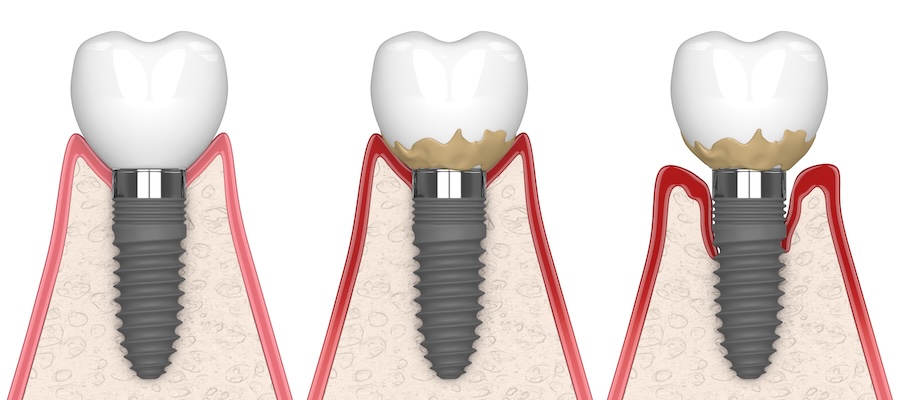
This early stage is often called peri-implant mucositis. It affects the soft tissue around the implant. If it is caught early, it may be managed with professional cleaning, better home care, and close monitoring.
If inflammation progresses deeper and affects the bone around the implant, it may become peri-implantitis. That is more serious because implants depend on bone support for stability. Bone loss around an implant can threaten the long-term success of the restoration.
Because of that, tenderness should be checked if it does not settle. Catching inflammation early gives the dental team more options.
Food Trapping Can Make an Implant Sore
Food trapping is a common reason gums feel tender around an implant crown. The shape of the crown, the space between teeth, gum changes, or the way food moves during chewing can all affect whether food gets packed near the implant.
You may notice that meat fibers, seeds, popcorn hulls, or small bits of food keep getting stuck in the same spot. The gum may feel sore after meals, and floss may come out with debris or a bad smell.
If food trapping happens once, it may simply irritate the tissue for a day or two. However, if it keeps happening, the gums can stay inflamed. Over time, repeated irritation can contribute to deeper problems around the implant.
Do not dig aggressively with sharp objects to remove food. That can cut the gum tissue or scratch the implant components. Instead, use the cleaning tools recommended by your dental team and schedule a visit if the same area keeps trapping food.
Dr. Ryan or Dr. Regier can check the implant crown shape, contact between teeth, gum health, and whether the area needs an adjustment or a different cleaning approach.
Bite Pressure Can Cause Tenderness
A dental implant does not move in the same way a natural tooth does. Natural teeth have a periodontal ligament that provides a small amount of cushioning. An implant is anchored directly in the bone, so it does not have that same built-in shock absorber.
Because of that, bite pressure can be a big part of implant comfort. If the implant crown hits too hard when you chew or clench, the area may feel sore even though nothing is loose.
This may happen after a new crown is placed, after dental work on nearby teeth, or if your bite changes over time. Grinding and clenching can also put extra pressure on implant restorations, especially at night.
Bite-related tenderness often shows up when chewing, tapping the teeth together, or biting into firmer foods. It may feel like a bruised sensation deep around the implant.
A bite adjustment may help if the implant crown is taking too much force. Dr. Ryan or Dr. Regier can use marking paper to see how the teeth contact and adjust the restoration if needed.
Tenderness After a New Implant Crown
If your implant crown was placed recently, some mild tenderness may happen as the gum tissue and bite adjust. The crown has a new shape, and the surrounding tissues may need time to settle after the restoration is attached.
However, the tenderness should not be strong or getting worse. If the crown feels high, if chewing feels uneven, or if soreness increases after meals, the bite may need to be checked.
It is also possible for the gum tissue around a new crown to feel tender if it was irritated during placement or if it is difficult to clean around the new shape. Gentle brushing and careful cleaning around the implant are important during this stage.
If soreness is improving each day, monitoring briefly may be reasonable. If it lingers, worsens, or affects your chewing, call Ryan Dental. A small adjustment early can prevent weeks of unnecessary soreness.
Tenderness Years After Implant Placement
An implant that has felt fine for years and suddenly becomes tender should be checked. A change after a long period of comfort may point to gum inflammation, food trapping, bite changes, crown issues, grinding, or bone changes around the implant.
Sometimes people assume an old implant cannot have problems because it has already healed. However, implants still need ongoing care. The implant itself cannot get a cavity, but the gums and bone around it can become inflamed or infected.
The crown can also wear, chip, loosen, or collect food around its edges. Nearby teeth may shift slightly over time, changing how food packs or how the bite comes together.
If an older implant starts feeling tender, especially if there is bleeding, swelling, a bad taste, or biting pain, schedule an evaluation. The visit can help identify the cause before the support around the implant is affected.
What You Can Do at Home
While waiting for your appointment, keep the area clean without being rough. Brush gently around the implant crown and gumline. If you use floss, move it carefully and avoid snapping it hard under the gum tissue.
A water flosser or interdental brush may help clean around some implant restorations, but the right tool depends on the shape of the crown and the space around it. If you are not sure what to use, ask the team at your visit.
Warm salt water rinses may help calm irritated gum tissue for a short time. In the meantime, avoid chewing hard, crunchy, or sticky foods on that side if the implant feels sore when biting.
Do not try to tighten, wiggle, or test the implant repeatedly. Pressing on it all day with your tongue or fingers can make the area feel more irritated and may not tell you what is actually going on.
Also avoid placing aspirin directly on the gums. It can burn the tissue and create more soreness.
What Not to Ignore
Certain implant symptoms should not be monitored at home. Swelling, pus, drainage, fever, or a bad taste from the implant area should be checked promptly. These can be signs of infection.
Bleeding around the implant should also be taken seriously if it happens often or comes with tenderness. Healthy implant tissue should not bleed regularly during gentle brushing or cleaning.
Pain when biting should be checked, especially if it is getting worse or making you avoid chewing on that side. Bite pressure can irritate the bone around an implant and may need adjustment.
Any looseness needs attention. Sometimes the implant crown or abutment is loose rather than the implant fixture itself, but you cannot reliably tell the difference at home. Either way, the restoration should be evaluated before more damage occurs.
What Ryan Dental May Check
During an implant evaluation, Dr. Ryan or Dr. Regier may check the gum tissue around the implant, look for bleeding or swelling, and measure the area around the implant. They may also take an X-ray to look at the bone level and implant components.
The bite will likely be checked too, especially if tenderness happens while chewing. Even a small high spot can affect an implant because the implant does not have the same cushioning as a natural tooth.
The crown and abutment may be examined to see whether anything is loose, chipped, worn, or trapping food. If the area is hard to clean, the team may review which home care tools make the most sense for that implant.
Treatment depends on what they find. The answer may be a cleaning, bite adjustment, crown repair, home care changes, medication, periodontal treatment around the implant, or referral if the problem is more involved.
How to Help Protect Your Implant Long-Term
Dental implants need regular maintenance. Even though they are not natural teeth, they still depend on healthy gum tissue and bone support.
Brush around the implant daily and clean between the implant and nearby teeth. Keep regular dental visits so the team can check the gum tissue, bite, crown, and bone levels.
If you grind or clench, ask whether a nightguard is recommended. Grinding can put extra pressure on implant crowns and natural teeth. A nightguard may help protect the restoration while you sleep.
It also helps to mention health changes. Diabetes, smoking, vaping, certain medications, dry mouth, and a history of gum disease can affect implant health. Sharing that information helps the dental team watch the implant more closely.
Small changes are easier to manage when they are caught early. Tenderness, bleeding, food trapping, or bite changes are all worth mentioning during visits.
Dental Implant Tenderness at Ryan Dental in Olathe, KS
If your implant feels tender but not loose, the cause may be mild gum irritation, food trapping, bite pressure, healing around a new crown, or inflammation around the implant. Mild tenderness that is improving may be watched briefly, but tenderness that lasts, worsens, returns, or comes with bleeding, swelling, drainage, bad taste, or biting pain should be checked.
At Ryan Dental in Olathe, KS, Dr. William Ryan and Dr. Randy Regier can evaluate your implant, gum tissue, crown, bite, and bone support to find out why the area feels sore. Call Ryan Dental to schedule a visit and get the implant checked before a small irritation turns into a larger problem.
Categorized in: Dental Implants, Dental Tips, Gum Health