
What Is an Overdenture, and Who Benefits From the Extra Stability?
April 24, 2026 9:00 amDentures can do a lot—they restore your smile, help with eating, and make daily life feel more normal again. At the same time, for many people, the challenge isn’t having teeth—it’s how steady those teeth feel once they’re in.
That’s where things can start to feel frustrating, especially with a lower denture. You might notice it shifting when you eat, or needing to be repositioned here and there throughout the day. Sometimes it feels fine at first, but later on, it just doesn’t sit the same way. Over time, you may catch yourself adjusting without thinking about it—chewing a little differently, avoiding certain foods, or being more careful than you’d like.
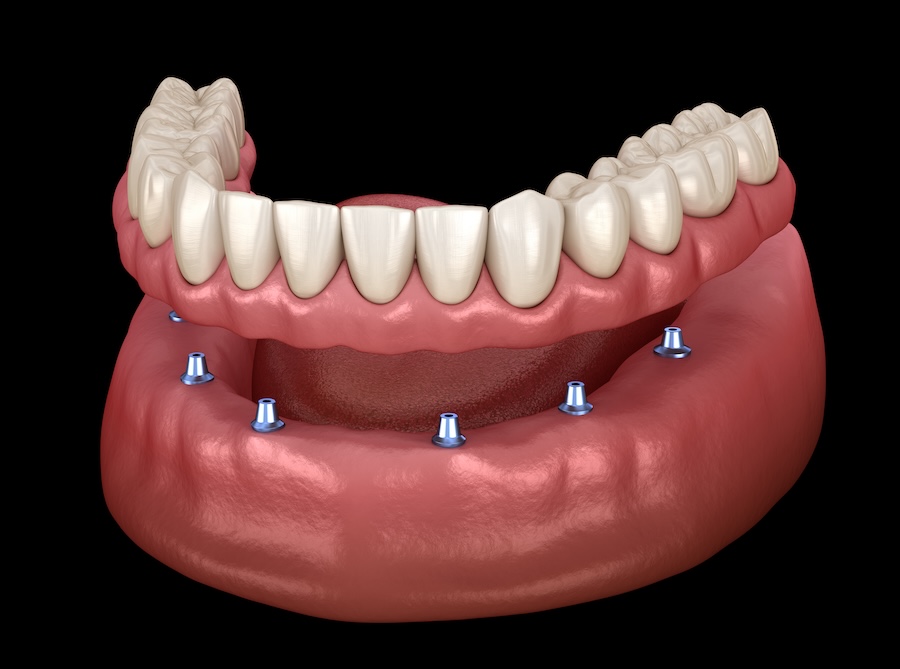
An overdenture is designed to improve that experience. Instead of relying only on the gums, it adds support underneath so the denture has something more stable to connect to, which changes how it feels during everyday use.
What Is an Overdenture?
An overdenture is a denture that attaches to something in the mouth for added support, rather than resting on the gums alone. Most often, that support comes from dental implants, which are small posts placed in the jaw that act as anchors.
The denture connects to those implants, so instead of depending only on suction or adhesive, there’s a more stable foundation underneath it. Because of that, the denture tends to stay in place more consistently throughout the day, even during activities like eating or speaking.
In some situations, if there are still healthy tooth roots present, those can be used as well. Not everyone is a candidate for that approach, but the goal is the same—giving the denture something solid to sit on so it doesn’t have to rely entirely on the gums for support.
Why Stability Makes Such a Difference
With traditional dentures, especially on the lower arch, some movement is part of the experience. The lower jaw doesn’t offer the same surface area as the upper, and it’s constantly moving with the tongue and surrounding muscles.
Most people learn to work around it over time. You might take smaller bites, avoid certain textures, or adjust how you chew without really thinking about it. Those adjustments become routine, even if they’re not ideal.
When the denture is anchored, those small workarounds become less necessary. You’re not shifting the denture back into place as often or checking it throughout a meal. Eating tends to feel more straightforward, and there’s less second-guessing about how things will hold up from one bite to the next. It’s a more consistent experience, which tends to make a difference over the course of a full day.
How Overdentures Compare to Traditional Dentures
From the outside, an overdenture looks very similar to a traditional denture. The difference is in how it’s supported and how it behaves during use.
A traditional denture rests on the gums and stays in place based on how well it fits. As the jaw changes over time, that fit can loosen, which is when movement becomes more noticeable. Adjustments and relines can help, but they don’t always fully solve the issue.
An overdenture still rests on the gums, but it also connects to implants or retained roots. That connection helps limit movement and provides a more stable feel during everyday activities like eating and talking. Even with that added support, it remains removable, so cleaning and daily care stay familiar and manageable.
Who Typically Benefits From an Overdenture
Overdentures are often a good option for patients who feel like their current denture is close to working well, but not quite where they want it to be. If it shifts during meals, feels less secure as the day goes on, or relies heavily on adhesive, those are all signs that additional support could help.
They’re also worth considering for patients who are planning ahead. If dentures are part of your future, adding implant support from the beginning can help avoid some of the common frustrations that tend to come up over time.
For patients who have had dentures for a while, changes in the jawbone can affect how well the denture fits. In those cases, implants can provide a more consistent base, helping restore some of the stability that may have been lost.
What the Process Looks Like Step by Step
The process begins with an evaluation of your gums, bone structure, and any existing dentures. This helps determine whether implants are a good option and how many would be needed for support.
If implants are placed, they are given time to heal and integrate with the bone. This step is important because it creates the stable foundation the overdenture will rely on. During this time, a temporary solution may be used so you’re not without teeth.
Once healing is complete, the denture is either modified or remade so it can properly connect to the implants. In some cases, an existing denture can be adjusted, while in others, a new one provides a better overall fit and function. The focus throughout is on making sure the final result works well in everyday situations, not just during the appointment itself.
What You Notice Day to Day
The difference tends to show up in routine moments rather than all at once. Meals often feel more steady, especially when eating foods that require a bit more pressure. You may find yourself less cautious about what you choose, simply because the denture feels more reliable.
Speaking can also feel more natural, since there’s less movement to adjust for mid-conversation. Over time, it becomes less about managing the denture and more about going through your day without having to think about it as often.
Overdentures in Olathe, KS at Ryan Dental
At Ryan Dental in Olathe, KS, Dr. William Ryan and Dr. Randy Regier work with patients who want their dentures to feel more stable and reliable in everyday life. Whether you’ve been wearing dentures for years or you’re just starting to explore your options, overdentures can be part of that conversation.
If your denture doesn’t feel as secure as you’d like, or you’re thinking ahead and want to understand what’s possible, it’s worth coming in to talk it through. You can call the office or schedule a visit to see whether an overdenture is a good fit and what that process would look like for you.
Categorized in: Implant Supported Dentures, Overdentures